Electron | Aspera
Read More expand_more
Aspera houses an ultraviolet telescope and will examine hot gas in the intergalactic medium, thought to be contributing to the birth of stars and planets. Aspera will be the first NASA astrophysics mission to gather and map these ultraviolet light signatures, potentially unlocking a deeper understanding of the origins of stars, planets, and life in the universe.
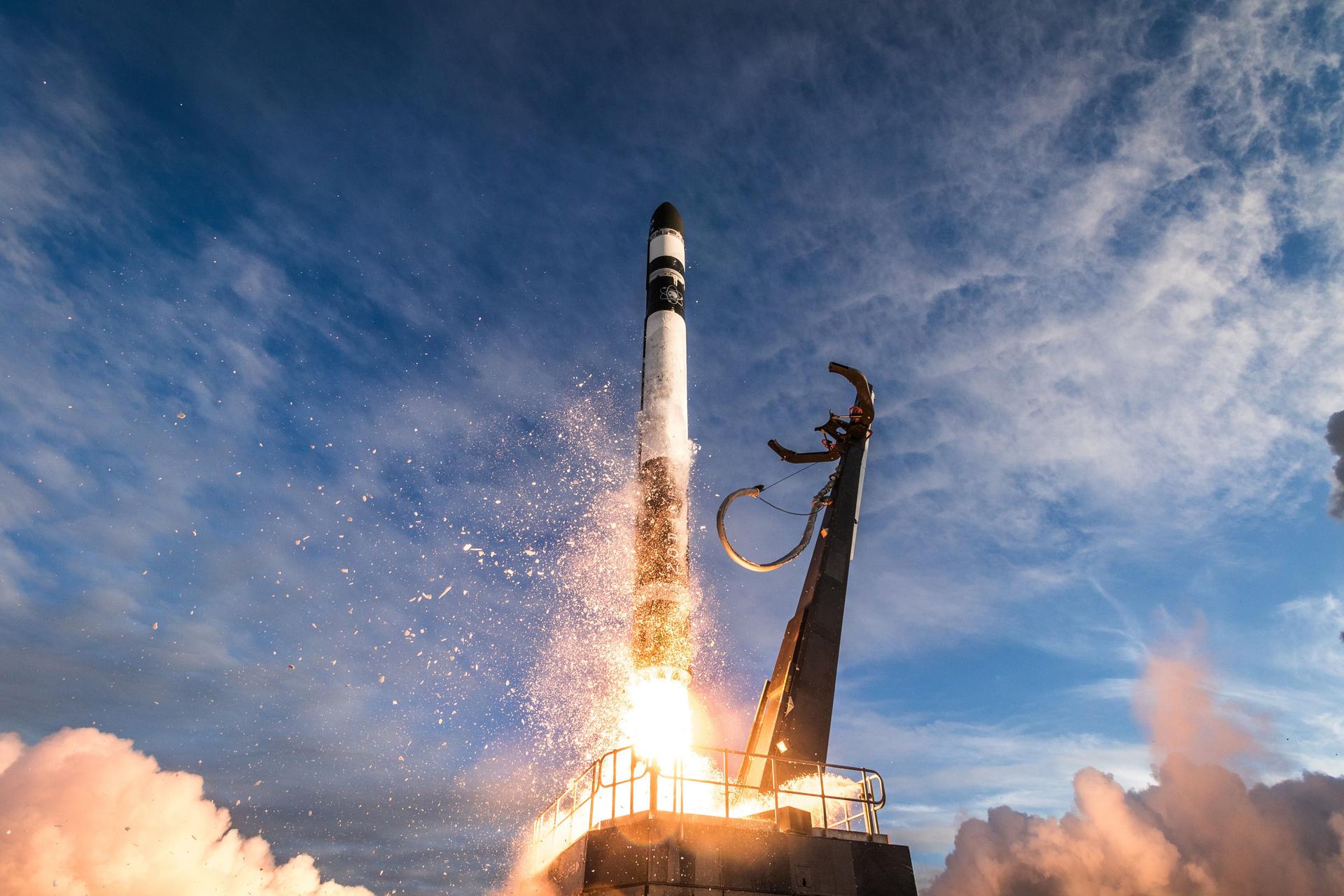
Mission Profile
Launch Date
Aug 15
2026
Time
00:00
UTC
Rocket
Electron
Site
ll-location-10
ll-pad-210
Orbit
LEO
Low Earth Orbit
history
Launch Timeline
expand_circle_down
Auto Sequence
The launch computer takes full control of the countdown.
Ignition
All 9 Rutherford engines on the first stage ignite.
Liftoff
Hold-down clamps release and the rocket clears the pad (Launch Complex 1 in NZ or LC-2 in Virginia).
Supersonic
The vehicle accelerates past the speed of sound.
Max Q
Peak aerodynamic pressure (maximum mechanical stress).
MECO
Main Engine Cutoff: first stage engines shut down.
Show More Events Show More Events expand_more
Stage Separation
Pneumatic pushers separate the first stage from the second stage.
Stage 2 Ignition
The single vacuum-optimized Rutherford engine ignites.
Fairing Jettison
The payload fairing separates.
Battery Hot Swap
Second stage batteries are jettisoned and the system switches to a fresh battery to complete ascent.
SECO
Second stage engine cutoff; the vehicle reaches a parking orbit.
Kick Stage Separation
The payload stack (Kick Stage) separates from the second stage.
Curie Engine Burn
The Curie engine on the Kick Stage fires to circularize the orbit.
Payload Deployment
Satellites are released.
Deorbit Burn
The Kick Stage performs a burn to reenter and burn up in the atmosphere.
Drogue Parachute
Drogue parachute deploys to stabilize the booster during descent (recovery missions).
Main Parachute
Main parachute deploys to slow the booster for splashdown (recovery missions).
Splashdown
Booster splashes down in the ocean for recovery by ship (recovery missions).
Mission Payload
Aspera houses an ultraviolet telescope and will examine hot gas in the intergalactic medium, thought to be contributing to the birth of stars and planets. Aspera will be the first NASA astrophysics mission to gather and map these ultraviolet light signatures, potentially unlocking a deeper understanding of the origins of stars, planets, and life in the universe.